
Which Squeeze-Toy and Shelf-Fidget Suppliers Pass?
Compare squeeze-toy and shelf-fidget suppliers using material-specific sample checks, catalog examples, and pass, conditional, or fail decisions.
For US, EU, and global importers sourcing through a factory or trading supplier, advance squeeze-toy and shelf-fidget suppliers only when their material evidence matches the exact toy and its intended shelf role. A gel-filled TPR squishy needs shell, fill, leakage, and squeeze-recovery checks; an ABS-listed squeezing toy needs its moving mechanism identified before a meaningful comparison. Use the scorecard below to separate catalog fit from sample approval, then retain an approved reference before placing an order.
For a sensory shelf, the buying question is not simply whether a toy can be squeezed. Decide whether it provides the resistance, surface feel, recovery, and sound level you want during repeat play. A decorative shape can earn attention; the mechanism must earn its shelf position.
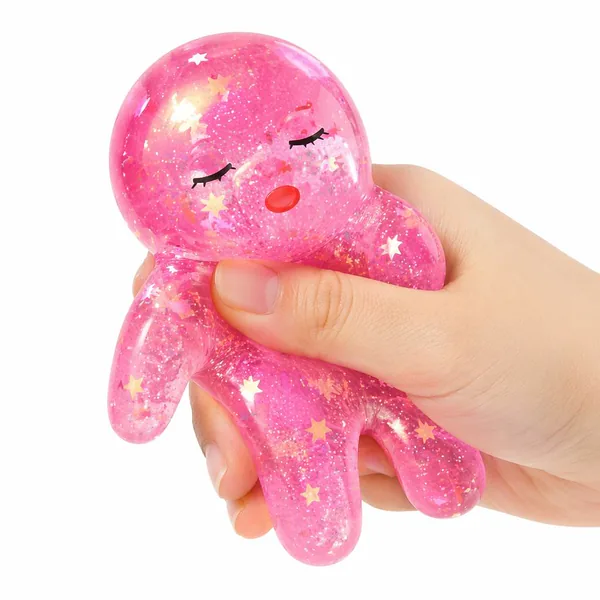
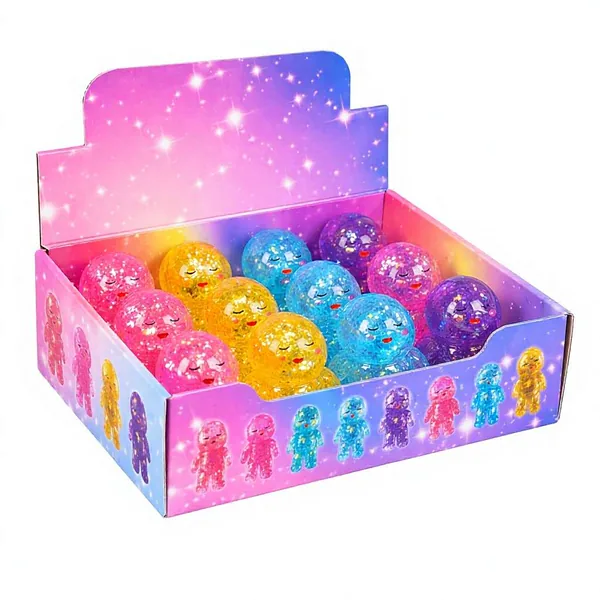
What does each squeeze-toy construction require the buyer to verify?
The jellyfish squishy supports a gel-filled TPR sampling brief, while the ABS-listed squeezing toy requires a component-and-action explanation before its squeeze behavior can be specified.
These catalog references are dated October 9, 2026. Treat their packing and quantities as order-planning references, not confirmed inventory or current commercial terms.
| Jellyfish maltose squishy | Recorded construction: a thickened, transparent, glitter-infused TPR soft-rubber head shell filled with maltose gel. Packing: display box. Reference MOQ: 240 units. Carton quantity: 240 units. Sampling decision: conditional—advance to shell-and-fill evaluation, with closure construction, squeeze resistance, recovery, leakage, and actual sound checked on identified samples. |
|---|---|
| ABS-listed squeezing toy | Recorded material: ABS. Packing: OPP bag. Reference MOQ: 1,200 units. Carton quantity: 600 units. Sampling decision: conditional—request an operating demonstration and component-level construction description with the sample. The ABS entry alone does not identify which part moves, flexes, or returns, and does not establish the whole toy's feel. |
Which mechanism belongs on a quiet sensory shelf?
Choose the gel-filled jellyfish for evaluation when the assortment needs a deformable shell-and-fill squeeze experience; evaluate the ABS-listed toy for a mechanical shelf-fidget role only after its action is demonstrated.
For the jellyfish, describe the desired squeeze rather than asking for something that merely feels “soft.” Specify where the hand compresses the head, the intended resistance, the acceptable surface tack, and what counts as recovery after release. Inspect how the shell contains the gel, including the closure and any visible seams. The name “maltose” is not evidence of edibility or age suitability.
For the ABS-listed toy, ask: “Show which component the user presses, what moves inside, and what returns it to its starting position.” Evaluate resistance, reset, sticking, rattling, and any intended click against the shelf brief. Do not apply a gel-leak criterion to a construction without a filled chamber, or a slow-rise target to a mechanism that resets mechanically.
Quietness is a separate acceptance decision. Compare each candidate with a retained sound reference under the same room conditions and operating action. For a quiet-desk assortment, reject an intended click if it conflicts with that brief—even when the mechanism otherwise works.
What should every candidate supplier return with the material-evidence scorecard?
Every supplier should answer the same requests with records tied to the quoted toy, while the physical acceptance criteria branch by construction.
Use this as the SqueeZaa buying worksheet. Record the supplier's actual response beside each criterion; a sales statement, a construction record, and a physical observation are different kinds of evidence. The acceptance rules below are proposed purchasing criteria, not safety standards or measured predictors of returns.
| Exact construction and sample identity | Request: identify the quoted model, revision, component materials, photographs, and sample IDs; distinguish shell and fill for the jellyfish and explain the operating parts for the ABS-listed toy. Accept: a dated specification that matches the samples and demonstration. Decision: pass this check when the construction is reconciled; keep it conditional while a component description needs clarification; fail the submitted version if it contradicts the agreed construction and is not corrected. Why it helps: it establishes what the buyer is actually comparing. |
|---|---|
| Squeeze feel, recovery, and sound | Request: samples evaluated under the same written action and observation method. Supplier response should identify the proposed feel reference and explain any difference from it. Accept: observations within the buyer-agreed resistance, recovery, reset, and sound limits for that mechanism. Decision: pass against the reference, conditionally retain a documented revision, or fail a version outside the agreed shelf brief. Why it helps: it turns subjective preference into a repeatable assortment decision. |
| Shell, closure, surface, and assembly condition | Request: unit-level inspection records with photographs of any defect. For the jellyfish, inspect shell damage, closure condition, and gel escape; for the ABS-listed toy, inspect relevant joints, moving parts, and assembly condition. Check coating or decoration only where present. Accept: no visible leakage, new cracking, decoration transfer, or loss of function under the agreed screening method. Decision: fail the affected submitted version when it breaches these proposed criteria; evaluate a corrected revision separately. Why it helps: a product-level average must not hide a defective individual sample. |
| Destination-market and intended-user review | Request: state the destination country, sales channel, proposed age grading, labels, and the product-specific reports and declarations proposed for that sale. Accept: documents reviewed for the actual construction, intended user, and applicable market, with differences from the sample explained. Decision: keep order release conditional until the responsible reviewer accepts coverage; do not treat a company badge as item approval. Why it helps: a tactile sample check does not establish legal compliance. |
| Packing, assortment, and replenishment | Request: a current quote identifying unit packing, display contents or bag presentation, assortment split, MOQ, carton quantity, repeat-order terms, and proposed shipment milestones. Accept: written terms for the selected version and destination, including how repeat orders retain the approved construction. Decision: advance a commercially workable proposal; hold conflicting packing or replenishment terms for resolution. Why it helps: a suitable squeeze mechanism still needs a workable shelf presentation and reorder route. |
| QC responsibility and change control | Request: identify who controls the specification, who inspects the toy, which production checkpoints apply, and who authorizes changes to shell, fill, mechanism, decoration, or packing. Accept: named responsibilities, agreed inspection criteria, and written approval before specified changes. Decision: pass the control plan when responsibilities are clear; retain conditions until disputed responsibilities are resolved. Why it helps: it connects the approved sample to the proposed production checks without assuming factory ownership determines QC quality. |
| Communication and corrective response | Request: return comments against each scorecard item, with an owner and agreed response date for corrective work. Accept: answers that address the exact toy, explain deviations, and close actions with matching evidence. Decision: record timeliness and completeness separately from product acceptance. Why it helps: a slow reply is a communication observation, not proof of fraud, future defects, or worse behavior after payment. |
How should buyers run a comparable squeeze-and-repeat-play check?
Compare samples only after agreeing the operating action, observation endpoint, ambient conditions, and acceptance reference in writing.
For the gel-filled jellyfish, define the compression location and depth, hold time, release method, repeat count, and recovery endpoint. Record the actual conditions and results for each identified unit. Inspect the closure, shell, and any decoration before and after the sequence; photograph leakage, cracking, or other changes rather than recording only “good” or “bad.”
Use the relevant press-and-reset sequence for the ABS-listed toy once its mechanism is identified. Keep the action consistent across candidates, and note sticking, incomplete reset, new rattling, visible damage, and sound. Measure recovery only for the part that actually deforms or returns.
If density forms part of the specification, record its measurement method and result separately from recovery. A density statement or weight measurement does not establish how quickly the toy returns. Neither replaces observation of the finished mechanism.
Agree screening tolerances and repeat counts before examining the results. These are commercial sample criteria, not compliance tests, and a passing sample does not establish a production defect rate.
What are the completed catalog-stage decisions for the two toy references?
Both references receive a conditional sample-stage decision, but for different construction questions; neither receives supplier or production approval from its catalog entry.
The decisions below distinguish fields that can shape a sample request from conditions that must be resolved through supplier responses and observed samples.
| Jellyfish maltose squishy — conditional | Catalog fit: the TPR head shell and maltose-gel fill identify the shell-and-fill sampling route; display-box packing, reference MOQ of 240, and 240 units per carton support initial order planning. Advance: request identified samples for the written squeeze protocol. Conditions for sample approval: confirm the closure construction, record per-unit shell and leakage observations, agree feel/recovery/sound limits, and complete the intended-user and destination review. Fail trigger: an observed breach of the agreed physical criteria in the submitted version. |
|---|---|
| ABS-listed squeezing toy — conditional | Catalog fit: ABS, OPP-bag packing, reference MOQ of 1,200, and 600 units per carton support a preliminary commercial request. Advance: request the operating demonstration and construction description with the sample. Conditions for sample approval: identify the moving and returning parts, apply the appropriate repeat-action protocol, and accept reset, surface condition, assembly, and sound against the shelf brief. Complete the intended-user and destination review separately. Fail trigger: a construction mismatch or observed breach of the agreed functional criteria in the submitted version. |
How should pass, conditional, and fail decisions control advancement?
Advance a supplier to sample approval only when the construction and observed performance meet the agreed criteria; use conditional status for specific, closable actions rather than treating it as a softer pass.
Pass means the applicable criteria for the stated stage have been satisfied. Conditional means the candidate remains under consideration with a named action, owner, and closure date. Fail means the submitted version breaches an agreed criterion; a corrected version needs its own revision identity and reassessment. Do not let a low price or attractive packing offset a failed material or mechanism check.
Reference MOQs are minimum-quantity planning entries, not evidence of an order-multiple rule. Carton quantities describe packing. Confirm any full-carton restriction explicitly instead of assuming every order must be rounded up.
Apply the same evidence standard to factories and trading suppliers. Ask who controls the production specification and inspection records; company type alone neither proves nor disproves effective QC.
What must the signed sample-approval record contain?
The approval record should connect a dated physical reference to the specification, observed results, decision, and responsible approvers.
Retaining a signed reference with agreed tolerances and using it during pre-shipment inspection is a recommended purchasing practice, not a certification or legal approval. Evaluating Squishy Samples
| Identity and revision | Enter supplier identity, buyer product reference, specification revision, sample IDs, receipt date, photographs, and the location of the retained physical reference. Identify the relevant destination, channel, and intended-user brief. |
|---|---|
| Specified target versus observation | Record the agreed construction, protocol revision, physical acceptance limits, and packing target beside each unit's actual observations. Keep gel-shell leakage findings separate from mechanical reset findings. |
| Decision and conditions | Select pass, conditional, or fail for the stated approval stage. Describe each deviation and whether it requires clarification, a revised sample, further review, or rejection of that version. |
| Responsible approvers and date | Record the buyer's product approver, the responsible quality or compliance reviewer where applicable, supplier acknowledgment, and dated sign-offs. State who may authorize a change. |
| Follow-up and closure | Assign each action an owner and due date. Record the corrected revision, supporting evidence, closure decision, reviewer, and closure date before lifting the relevant hold. |
| Production and pre-shipment comparison | Attach the retained-reference identity and agreed inspection criteria to the order. Record any authorized replacement reference and its approval history; compare relevant production samples against that reference at the agreed checkpoints. |
Which supplier should receive the order?
Choose the supplier whose exact toy meets the material-and-mechanism brief, whose sample passes the agreed checks, and whose commercial and destination-review conditions are closed.
For a gel-squeeze shelf position, prioritize demonstrated shell-and-fill performance. For a mechanical desk-fidget position, prioritize the demonstrated action, reset, and sound profile. Keep those decisions separate from packing convenience or reply speed.
A retained reference and approval record support traceability; they do not by themselves prevent or expose an undisclosed substitution. Use them alongside agreed production checks and pre-shipment comparison—not instead of those checks.