
Illustrative buyer brief for squishy toy assortments: from product idea to reorder
A practical buyer brief for squishy toy assortments: product fit, packaging and MOQ, safety evidence, delivery checks, and quote-ready next steps.
For wholesale squishy toy assortments, the buying decision is a sequence: match the product to your channel, lock packaging and MOQ, verify safety evidence, and plan delivery checks before you commit to a reorder. Skipping any step turns a fast-selling novelty into a port seizure or a customer complaint. Each stage below comes with concrete questions to ask any supplier, so you can evaluate factories on evidence, not hype.
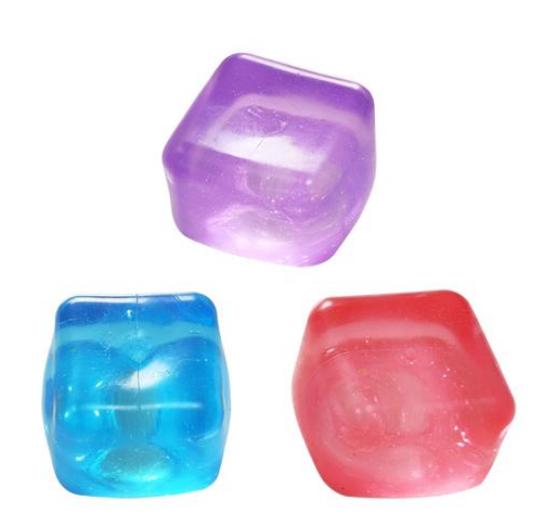
- Start with product fit, not price: Define the feel (slow-rise, jelly, bead-flow) and age grade first; these drive material, tooling, and compliance cost. A 3.5cm ice-cube squishy that recovers in hand may fail after a week in a dump bin—test recovery, not just the first squeeze.
- Packaging and MOQ are linked: Retail-ready display boxes raise MOQ and per-unit cost but improve sell-through; bulk polybag lowers cost but may need added warning labels. Expect MOQs around 720–1,440 pcs for display-box styles, lower for simple polybag SKUs.
- Safety evidence is non-negotiable: CPSC has intercepted 55 shipments and stopped 355,683 violative squishy units at U.S. ports. Require CPSC-accepted third-party lab testing and certification; never rely on self-testing or a supplier's word.
- Inspect function, not just appearance: Functional QC should exercise the actual play—squeeze cycles, leak tests, and conditioning—not just verify the toy looks complete or turns on. Food-look bakery sets need a food-look warning, small-parts check, and print-rub on the icing.
How do you match a squishy product to your channel?
Channel determines the product spec. Gift shops and bookstores lean toward slow-rebound food shapes like baozi buns and mini fruits—they sell on novelty and display. Ecommerce and blind-box channels need compact, visually striking items that photograph well, like the 8.5cm glow-in-the-dark glitter bead baozi. Party-favor buyers prioritize low unit price and high perceived value, which is why maltose egg and strawberry squishies in simple polybags dominate that segment.
Match the feel to the promise. PU foam gives slow-rise recovery, TPR gives stretch and translucency, ABS gives a firmer, crackly texture. If your listing says 'stress relief,' a slow-rise PU or TPR product matches that claim; a firm ABS cube does not. If you target kids under 14, filled items (water beads, gel, sand) often trigger a 14+ age grade unless over-engineered—confirm this before you commit to a design.
What packaging and MOQ questions should you ask?
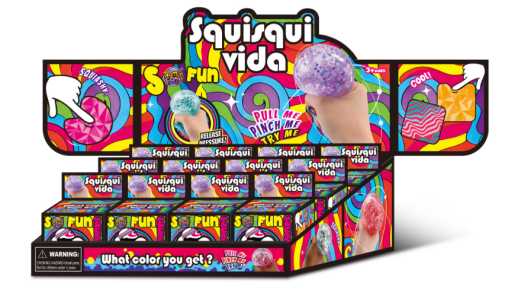
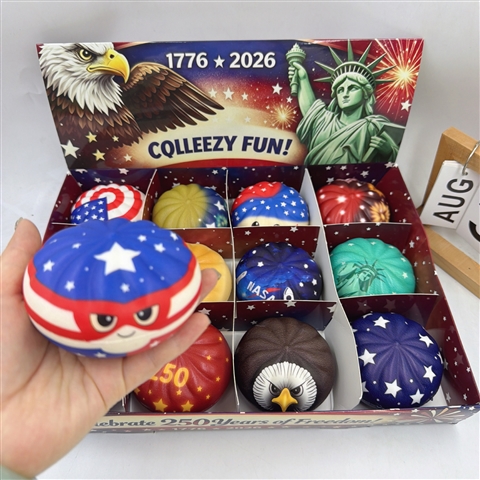
Packaging is not an afterthought; it changes your MOQ, cost, and compliance burden. Retail-ready display boxes (like the steamer display for baozi squishies) raise MOQ to around 864–1,440 pcs per style but give you shelf presence and unboxing appeal. Bulk polybag packaging drops MOQ to as low as 288 pcs for simple ABS shapes, but you must add required warning labels and possibly a polybag suffocation warning separately.
Private-label buyers should ask: Can we print our logo on the product, the hang tag, or the box? What is the artwork lead time? Does the packaging include age grading, manufacturer/importer ID, and tracking info? The CPSC alert flags missing warnings and poor packaging as signs of counterfeit product—so this is not just aesthetics, it's compliance. Also confirm HS/tariff classification for customs, but remember: classification is not a safety certification.
How do suppliers compare on common squishy styles?
| PU foam (slow-rise buns) | Specialty: slow-rebound food shapes; MOQ: 864–1,440 pcs; Origin: Chenghai/Shantou; OEM/ODM: yes; Certifications: varies by spec (CPSIA, EN71 if required) |
|---|---|
| TPR (bead-filled, jelly) | Specialty: stretchy, translucent, bead-filled; MOQ: 720–1,440 pcs; Origin: Chenghai/Shantou; OEM/ODM: yes; Certifications: varies by spec |
| ABS (maltose, egg shapes) | Specialty: firm, crackly, low cost; MOQ: 288–960 pcs; Origin: Chenghai/Shantou; OEM/ODM: yes; Certifications: varies by spec |
How do you verify a Chinese squishy factory objectively?
Start with documentation, not charm. Ask for the CPSC-accepted third-party test report on the exact product you're buying—not a generic report from a similar item. Check that the report covers lead, phthalates, and small parts, and that the manufacturer/importer ID appears on the packaging. If a supplier can't produce a report for the specific SKU, that's a red flag, especially after CPSC's 2026 enforcement push.
Then move to physical evidence. Request samples and run your own checks: squeeze the product 500–1,000 times, tear-test weak features, and leave it in a hot warehouse for a week to see if it deforms. A 3.5cm ice-cube squishy that recovers in hand may stay flat after a week in a dump bin—so a compression-and-recovery check beats a quick squeeze demo. For filled items, demand a leak test and confirm the age grade.
Finally, audit the factory or use a third-party inspection service. Chenghai and Shantou in Guangdong produce a huge share of the world's plastic toys; the concentration means you have options, but also that you must verify. Ask for the factory's business license, export history, and a video tour of the production line. If they hesitate, that's your answer.
What delivery checks prevent a bad reorder?
Before you approve a reorder, inspect the actual shipment, not just the sample. Functional inspection should exercise the play function—squeeze, recover, leak—not merely verify the toy looks complete. Check packaging for misspellings, poor printing, or missing warnings; these are CPSC red flags for counterfeit or noncompliant product.
Also plan for heat exposure. Squishy toys can become dangerously hot in direct sunlight, hot vehicles, or near heaters—so your logistics should avoid leaving cartons in a hot container or warehouse. If you ship to the U.S., confirm the supplier provides required warnings and tracking info; if to the EU, ask for EN71 compliance. HS classification affects duty but not safety, so don't confuse the two.
FAQ
What MOQ should I expect for a custom squishy order?
MOQ varies by material and packaging. PU foam display-box styles often start around 864–1,440 pcs, TPR bead-filled around 720–1,440 pcs, and simple ABS polybag styles as low as 288 pcs. For custom molds, expect higher MOQs; confirm with the supplier.
How do I verify a squishy toy supplier is compliant for the US market?
Request a CPSC-accepted third-party lab test report for the exact SKU, covering lead, phthalates, and small parts. Check packaging for age grading, manufacturer/importer ID, and tracking info. After CPSC's 2026 alert, missing these is a red flag.
What packaging options do suppliers offer for retail-ready distribution?
Common options include polybag, display box, and steamer display box. Retail-ready display boxes raise MOQ and cost but improve shelf appeal; polybag is cheaper but requires added warning labels. Ask about eco-friendly materials, but note they may affect MOQ and price.
How can I compare reliable suppliers for custom stress balls or squishies?
Compare on documentation (test reports, business license), sample quality (run squeeze tests, check recovery), and communication (do they mark unknowns as 'to be recommended' or guess?). A structured brief with confirmed vs. open items gets you accurate quotes faster.
What should I do if a supplier offers prices far below market?
Treat it as a warning sign. CPSC flagged 'suspiciously low prices' as a sign of counterfeit or noncompliant product. Ask for the test report and samples before committing; if they can't provide evidence, walk away.
Sources
Related Products & Categories
Request a Quote
Ready to turn your squishy idea into a reorder? Send us your product spec, target market, and packaging preference, and we'll prepare a quote with MOQ, lead time, and compliance documentation. We're one factory in Chenghai—but we'll also teach you how to evaluate any factory, so you can source with confidence.