Sourcing · Jul 18, 2026
Record Import Volumes: How to Secure Your Toy Supply Chain for Peak Season
Record July 2026 container volumes signal a frontloaded peak. Actionable guide to booking OEM toy production slots early, vetting suppliers, and securing inventory before...
In short: Record July 2026 container volumes signal a frontloaded peak. Actionable guide to booking OEM toy production slots early, vetting suppliers, and securing inventory before...
U.S. import container volumes are projected to hit an all-time record of 2.47 million TEUs in July 2026, compressing the traditional holiday peak season into a narrow May-to-July window. For toy buyers, this is a direct threat to on-shelf availability. This page maps out the concrete steps to take now: how to lock in a Chinese OEM production slot before the August tariff trigger, what compliance documentation cannot be skipped during a capacity crunch, and how to structure a purchase order when vessel space is tighter than it has been since May 2022. It covers production-capacity booking, supplier vetting under pressure, lead-time buffers, and the specific risk factors that make squeeze toys, sensory toys, and fidget toys especially vulnerable to rushed manufacturing.
What & Why: The 2026 Frontloading Shock
Retailers are frontloading goods to beat new tariffs expected as early as August 2026, pulling the traditional October peak forward by three months. The National Retail Federation reports that May volumes already hit 2.24 million TEUs—a 14.9% year-over-year jump—and first-half 2026 is tracking at 12.77 million TEUs. With vessel space evaporating and factory lines in Chenghai and Yiwu running hot, a “wait-and-see” approach means missing your shelf date.
The temporary 10% Section 122 global tariffs expire July 24, adding another layer of uncertainty. Meanwhile, geopolitical friction in Iran is pushing container rates upward. For a toy importer, the math is simple: a production slot booked in June lands goods in September. A slot booked in August risks a November arrival—or worse, a customs hold because someone cut corners on material safety documentation.
Benefits of Booking Production Early in a Compressed Peak
Securing a slot early does more than guarantee a vessel booking. It buys you the one thing that vanishes in a capacity crunch: factory attention. When a line is oversold, quality-control steps get abbreviated. Early orders get the senior shift workers, the first-run material batches, and enough time for a third-party lab test without delaying the container.
Early booking also locks in the freight rate you budgeted, not the spot rate you'll pay when carriers see 2.47 million TEUs coming. And from a compliance standpoint, it gives you leverage: a supplier who needs your repeat business isn't going to argue about providing EN 71 or ASTM F963 test reports when you've given them a 90-day production window. Try asking for those documents on a 30-day rush order—you'll get a PDF that was generated ten minutes ago.
Risk Categories That Get Ignored During a Capacity Crunch
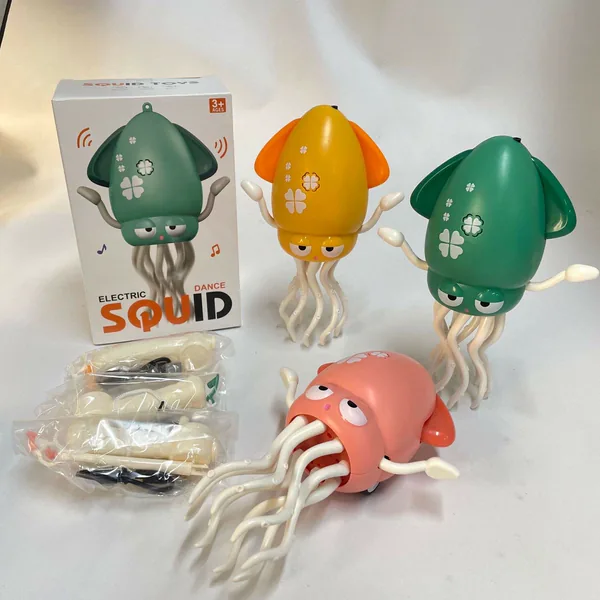
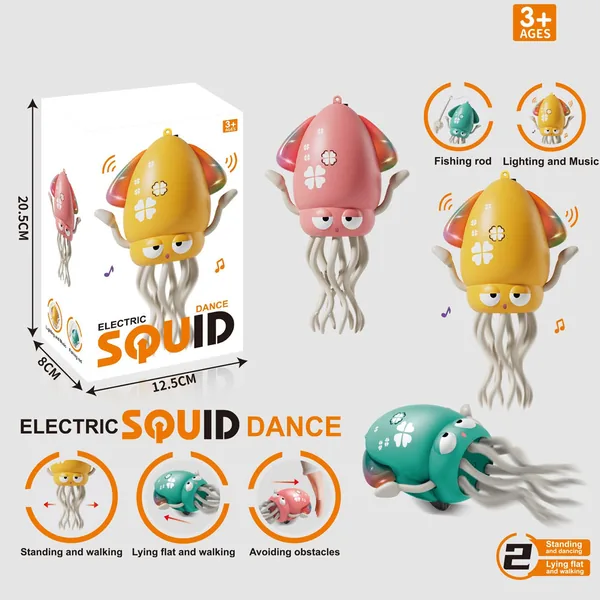
Not all toys carry the same risk when production speeds up. Squeeze toys, squishy toys, and fidget toys—the kind filled with gel, TPR, or soft PU—are high-exposure categories. Rushed curing times leave residual odors. Under-tested paint adhesion means color transfers onto a child's hand on a hot loading dock. Small parts like a squid tentacle joint that passes a pull test on the gold sample can fail on a mass-produced unit when the mold cavity wears down.
Ask your supplier a single question before you place the purchase order: “Which step in your process is most likely to fail if you have to double your output in two weeks?” A competent factory will answer immediately—they'll point to the drying line, or the hand-assembly station, or the overnight cooling rack. A factory that says “no problem, we can handle any volume” is telling you they don't know their own bottleneck. Walk away.
Popular Picks: What Moves When Shelf Space Is Scarce
When retailers are scrambling to fill containers before a tariff deadline, they default to proven SKUs. Novelty items that require explanation don't get the airtime. The products that move fastest in a compressed peak are those with immediate tactile appeal—something a buyer can squeeze once and understand.
A Chain-linked Dancing Squid, for example, is a desk-friendly fidget toy made of durable ABS with a segmented, articulated body. It clicks and twists without batteries, an app, or a demo. For an office supply chain or a bookstore buyer placing a last-minute holiday order, that's a low-friction SKU. The material is already ASTM- and EN 71-compliant when sourced from a factory that runs ABS as a core material, which means the compliance paperwork exists before the PO is even sent.
Risk & Sourcing Snapshot for Key Toy Categories
| Squeeze / Squishy Toys (TPR, PU foam) | High compliance risk when rushed (odor, curing time, paint adhesion). Demand stable year-round; peak-season orders compete with promotional-gift industry buyers. |
|---|---|
| ABS Fidget Toys (articulated, clicker, chain-linked) | Lower material risk; mold consistency matters. Easier to audit mid-production. Shorter post-mold processing time makes them a safer bet for tight windows. |
| Sensory / Tactile Balls and Mats | Moderate risk. Gel-filled items require leak-tight ultrasonic welding—a process that degrades fast under output pressure. Inspect welds on every production day, not just the AQL sample. |
| Plush with Embedded Fidget Elements | High complexity. Combines textile safety (flammability, small-part sewing) with mechanical fidget component testing. Not recommended for rush orders under 60 days. |
What to Ask Suppliers Before You Lock a Production Slot
Don't lead with price. Lead with capacity. In a frontloaded peak, the factories that still have open slots after July 1 are the ones other buyers already walked away from—and they walked away for a reason. Your RFQ should function as a diagnostic tool. Below are the questions that separate a production partner from a box-shifter, and the red flags that tell you to keep looking.
RFQ Diagnostic: Questions vs. Red Flags
| Question: How many molding machines run your ABS line, and what's your current utilization rate? | Red flag: Vague answer like “we have many machines.” A real factory gives you a number and a percentage—e.g., “12 machines, currently at 85%.” If they won't, they're a trading company that doesn't control the floor. |
|---|---|
| Question: Can you provide a third-party lab test report dated within the last 12 months for the exact material grade you'll use on my order? | Red flag: “We can provide after production.” During a capacity crunch, that means they haven't tested this batch and don't intend to. Insist on a pre-production test from the material lot they're about to run. |
| Question: What is your standard curing/drying time for this product, and what is the minimum time you can safely reduce it to? | Red flag: “We can speed it up, no problem.” Squishy toys with uncured core material reek of solvent and fail EU REACH. Get the standard time in writing on the PO; if the factory ships early, reject the lot. |
| Question: Show me your in-house pull-test and small-parts cylinder log for the last production run of this SKU. | Red flag: “We only do final random inspection.” A factory that doesn't log in-process mechanical safety checks is outsourcing your child-safety risk to chance. Walk away. |
For a first bulk order of wholesale fidget toys, what are typical MOQs and how do they vary between stock designs and custom OEM items?
Stock fidget toys from a Chinese manufacturer typically carry a per-SKU MOQ in the range of 240 to 500 units, depending on material complexity. A simple ABS articulated toy like a dancing squid may start at 480 pieces. Custom OEM orders—where you're changing color, adding a logo, or modifying a mold—push that minimum higher, often to 1,000–3,000 units per design. The increase isn't about material cost; it covers the line-changeover downtime and the risk of running a non-standard color batch that can't be sold to anyone else if you cancel.
Can a supplier offer custom color or logo molding for wholesale fidget toys, and what are the usual mold costs and minimum quantities for that service?
Yes, but not every supplier offers the same depth of customization. A simple logo pad-printing on an existing ABS part might add pennies per unit and require no new mold, with a minimum of 1,000 pieces to justify the setup. Custom color compounding—matching a specific Pantone in TPR or ABS—typically requires a 2,000–5,000 unit commitment because the material supplier sells masterbatch in minimum lots. For a new shape or an entirely new mold, expect a one-time mold fee that varies by cavity count and steel grade; a single-cavity fidget toy mold can run from a few hundred to a few thousand dollars, amortized across your order quantity. Ask for the mold ownership clause in your contract—you want a document that states the mold is yours and cannot be used for other clients without your written consent.
What are the typical MOQs for bulk fidget toys when ordering directly from a Chinese manufacturer, and do they offer tiered pricing for higher volumes?
Direct-from-factory MOQs cluster around 500 units for stock ABS fidget toys, with a sharp price break at the 3,000-unit and 10,000-unit thresholds where packaging automation and bulk material purchasing kick in. A toy priced at $1.10 at 480 units might drop below $0.90 at 5,000 units. Tiered pricing is standard; if a supplier quotes you the same unit price at 500 and 5,000 pieces, they're not a manufacturer—they're a middleman padding both ends. Always request the price-break table in writing before you issue a PO.
Can a supplier provide OEM customization for bulk fidget toys, such as custom colors, logos, or unique shapes, and what are the setup costs?
Custom color and logo work is widely available. The real differentiator is whether the supplier controls the molding floor. A factory with in-house injection machines can tweak a mold, run a color sample, and ship you a physical unit for approval within a week. A trading company has to relay your request to a third-party workshop, adding delay and miscommunication risk. Setup costs for logo pad-printing are minimal—often under $100 for the plate—while a new silicone mold for a custom squishy shape can run several hundred dollars. Always factor in the cost of a pre-production sample (PPS) shipped by air; during a compressed peak, waiting three weeks for a sea-freighted sample is waiting to fail.
How do lead times and shipping methods (sea vs. air) affect total cost and delivery windows for a wholesale order of bulk fidget toys?
Standard sea freight from a Chinese port to a U.S. West Coast warehouse runs 25–35 days port-to-door under normal conditions. Add 30–45 days of production lead time for a stock fidget toy order, and you're looking at a 60–80 day total window. In July 2026, with 2.47 million TEUs hitting the water, add at least two weeks of buffer for port congestion and chassis shortages.
Air freight collapses that transit time to 5–7 days but multiplies the per-unit freight cost by 4x–6x. For a lightweight ABS fidget toy, air freight can turn a $0.15 landed freight cost into $0.80, erasing your margin. Use air only for pre-production samples or to bridge a stock-out emergency. The smart move in a frontloaded peak is to split the order: ship 70% by sea early, and hold 30% for a later air shipment only if sell-through exceeds forecast. That strategy is cheaper than air-freighting the whole lot and less risky than betting everything on a single vessel that might sit at anchor for a week outside Long Beach.
FAQ
Why are toy import volumes hitting a record in July 2026?
Retailers are frontloading inventory to beat new tariffs expected in August, pulling the traditional October peak forward. May volumes already hit 2.24 million TEUs, and July is forecast at 2.47 million—the highest ever recorded.
How do I know if a factory is cutting safety corners under volume pressure?
Check for three things: a recent third-party lab report for the exact material grade, a daily in-process pull-test log, and a supplier who can name their production bottleneck without hesitation. If any of those is missing, assume compliance steps are being skipped.
What's the safest toy category to order during a compressed peak season?
ABS-based fidget toys with no soft-gel filling carry lower production risk than squishy or plush items. They require fewer curing steps, are easier to audit mid-run, and don't off-gas.
Should I pay for a pre-production sample by air freight right now?
Yes. During a capacity crunch, waiting 3–4 weeks for a sea-freighted sample means you'll miss the production window entirely. The $50–$100 air courier fee is the cheapest insurance you'll buy this season.
What's the single most important clause to add to my purchase order this season?
A material-cure and safety-testing hold clause: the factory cannot ship until you receive and approve a third-party test report from the actual production batch. No exceptions.
Related Products & Categories
Secure Your Production Slot Before the Window Closes
SqueeZaa runs its own production floor in Chenghai and specializes in soft squeeze toys and fidget toys built to withstand peak-season scrutiny. If you need a flexible OEM partner who can lock in a slot now and deliver compliant inventory before the August tariff trigger, request a quote. You'll receive a production schedule and a material-compliance plan—not a sales pitch.
Source this range with SqueeZaa
SqueeZaa is the wholesale brand of CPS Toys Trading Co., Ltd. in Chenghai, Shantou. Send your product list, target market, quantity and packaging needs for FOB / EXW pricing, samples, certificates and OEM/ODM options.
Ready to source fidget and stress toys?
Browse the wholesale catalog or send an inquiry with your target category and quantity.
View all products Request a Quote