
Smart Packaging Solutions for Squeeze Toys: Boosting Efficiency for Peak Season Demand
Learn how automated packaging like elastic staple machines helps squeeze toy factories in Chenghai increase speed and protect products. Real MOQ, cost, and process facts.
In a Chenghai squeeze-toy factory during Q3, the packaging line—not molding or coloring—determines whether your container makes the cutoff. When a US importer needs 50,000 stress balls in retail-ready blister cards by August, the difference between on-time delivery and a missed sailing often comes down to one piece of semi-automated equipment: the elastic staple machine. This article covers the specific machines, packaging formats, and per-unit costs that let factories maintain product integrity and hit peak-season deadlines without ballooning labor costs. You'll find real machine prices, packaging-type comparisons, and the exact questions to ask any Chenghai supplier before you place a seasonal PO.
The Real Bottleneck: Why Packaging Dictates Your Peak-Season Delivery
Walk the floor of a mid-size squeeze-toy workshop in Shantou in late July and you'll see the problem instantly. Injection machines run on cycle time—a cavity produces a squishy animal every 28 seconds, predictable and steady. But downstream, ten workers sit at folding tables manually inserting header cards into polybags and stapling them shut. Each worker manages roughly 3 pieces per minute. Do the math: a single 12-cavity mold outpacing the entire packing team within two hours.
This imbalance is what causes the dreaded 'production finished, waiting for packaging' status that delays FOB Shenzhen shipments by five to ten business days. For squeeze toys specifically—soft TPE or ABS items that can deform under compression—the packaging step is also the quality-protection step. A poorly sealed polybag lets in humidity that makes the surface tacky. A card stapled too close to the toy body leaves puncture marks. Smart packaging isn't just about speed; it's the last quality gate before the carton.
The Chenghai factories that have modernized this step deploy a mix of semi-automatic blister-sealing machines, foot-operated impulse heat sealers, and elastic staple guns (often the Deli or Jemco brands running off a small air compressor). These tools turn a 3-piece-per-minute manual station into an 8-to-12-piece-per-minute cell with only one operator. The capital outlay is modest—¥2,000 to ¥8,000 per station—but the throughput gain means a factory can process a 30,000-piece order in two shifts instead of five days.
Packaging Types That Protect Squeeze Toys During Transit
Not all packaging is equal when the product is a soft, squishable item. A squeeze toy packed loose in a bulk polybag will arrive at the Amazon FBA warehouse with deformed ears and a layer of warehouse dust on its sticky silicone surface. Chenghai factories that specialize in this category have learned through hard experience which formats actually work. The choice splits into three practical tiers, each with a distinct cost, machinery requirement, and protection level.
Bulk polybag with header card remains the workhorse for promotional squeeze toys and school-incentive programs. The bag typically uses OPP film at 0.04mm thickness—thinner and the card edge cuts through; thicker and the heat-seal cycle slows down. Factories add a small punched Euro-hole in the card for pegboard retail. This format costs roughly ¥0.08–0.15 per piece in material and labor when semi-automated.
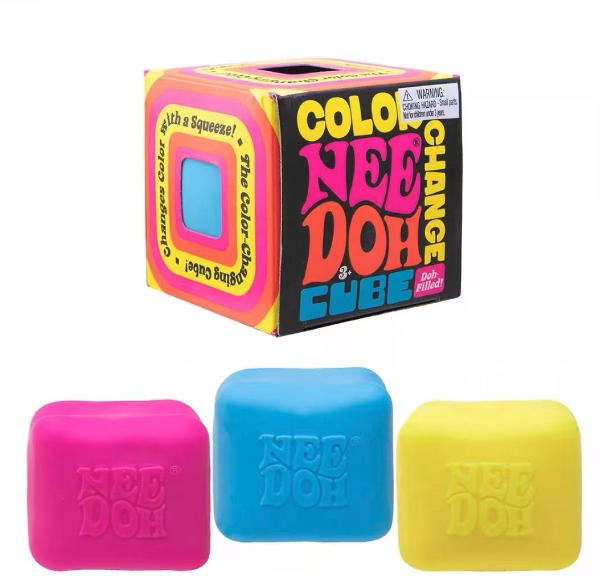
For products that need to stand upright on a shelf—like the Flour Cubes Squeeze Toy or any character with a defined front face—the factory will recommend a PVC or PET blister card. The blister is thermoformed on-site using a ¥15,000 blister machine, then RF-sealed or stapled to a printed backing card. This adds ¥0.30–0.60 per unit but eliminates the 'squashed product' returns that plague e-commerce sellers. One Chenghai workshop keeps a small library of failed-packaging samples to show buyers: a flattened cheese wedge squeeze toy that was bulk-packed in a polybag with no stiffener, now permanently creased.
The third tier is the display box or countertop unit, typically holding 12 or 24 pieces in a die-cut corrugated tray with a full-color lid. This format is growing fast for impulse retail and convenience-store channels. A 12-piece display box for squeeze-and-squish toys adds about ¥0.80–1.20 per unit but transforms the product from a commodity stress ball into a gift-ready item. Gift-ready packaging modules on e-commerce detail pages significantly lift conversion for soft squeeze toys in North American markets.
Squeeze Toy Packaging Formats: Cost, Speed & Protection Comparison
| Bulk Polybag (No Card) | OPP bag, impulse heat-sealed; lowest cost (~¥0.03–0.06/unit); zero shelf appeal; suitable only for refill bags or factory-to-factory transfer. Risk: product compression and dust adhesion. |
|---|---|
| Polybag + Header Card + Staple/Seal | OPP 0.04mm + 350g C1S card; elastic staple or heat-seal closure; ¥0.08–0.15/unit material + labor; pegboard-ready. Best for promotional squeeze toys and school reward programs. Semi-automated cell: 8–12 pcs/min. |
| PVC/PET Blister Card (RF-Sealed or Stapled) | Thermoformed blister + printed card; ¥0.30–0.60/unit; protects shape and prevents dust; essential for character toys with defined front faces. Requires blister machine (~¥15,000) and RF sealer or high-speed stapler. |
| 12/24-Piece Display Box | Die-cut corrugated tray + full-color lid; ¥0.80–1.20/unit incremental; transforms product into gift/impulse item; ideal for convenience stores, office supply channels, and automated retail. Often used for "Squeeze and Squish Fun" style assortments. |
| Custom Private-Label Box (Full Print) | Single-piece tuck-top or lid-bottom box; ¥1.50–3.00/unit depending on print complexity and paper stock; MOQ for custom print typically 2,000–5,000 boxes. Required for brand-owned e-commerce listings on Amazon or Shopify. |
Elastic Staple Machines and the Semi-Automation Sweet Spot
The elastic staple machine deserves its own explanation because it solves a specific squeeze-toy problem that heat sealers can't touch. Soft TPE toys—the kind that slowly return to shape after you squeeze them—off-gas slightly during the first few weeks after molding. If you heat-seal one inside an airtight polybag immediately, the bag balloons and looks like a puffed-up pillow by the time it reaches Long Beach. Buyers open the master carton and think the product is defective.
An elastic staple closure leaves a tiny air gap. The bag is sealed enough to keep the product clean and the header card locked in place, but the small opening at the staple point allows the off-gassing to equalize. This is factory-floor knowledge that most sourcing guides miss. The machine itself is simple: a pneumatic stapler mounted on a foot-pedal-activated jig, using thin elastic bands instead of metal staples. A worker places the bagged toy and header card into the jig, steps on the pedal, and a rubber band is wrapped and crimped around the bag neck in under a second. The bands cost about ¥0.003 each.
For a buyer placing a peak-season order, the practical question is: 'Does your factory use elastic staple or heat-seal closure for soft TPE squeeze toys?' If the answer is a confident 'elastic staple, because of off-gassing,' you're talking to a factory that understands the category. If they've never heard of the issue, their packaging line probably isn't optimized for this product type. One Chenghai supplier keeps samples of both closure types on hand to demonstrate the difference to visiting buyers—a small detail that signals operational maturity.
How to Verify a Chenghai Supplier's Packaging Capability Before You Order
A factory's packaging line tells you more about its overall quality system than the molding shop does. Injection machines look impressive, but packaging is where the labor-intensive, error-prone work happens. When evaluating a squeeze-toy supplier in the Chenghai/Shantou cluster, request these three specific pieces of evidence.
First, ask for a short video of their packaging line running a product similar to yours—not a polished marketing clip, but a WhatsApp video shot that morning showing the actual stapling or blister-sealing station in operation. Look for: is the workspace well-lit? Are finished goods placed directly on the floor or on pallets? Does the operator use a jig or fixture, or are they positioning each toy by hand? Hand-positioning without a jig leads to inconsistent staple placement and higher defect rates.
Second, request a packaging-material specification sheet. A competent factory can immediately tell you the OPP film thickness (should be ≥0.04mm for squeeze toys), the card stock weight (350g C1S is standard, 400g for heavier toys), and whether they use UV-cured or solvent-based inks on the print. If they can't tell you the film thickness, they're buying pre-made bags from a market stall and you have no control over the material.
Third, ask them to include a packaging pre-production sample (PPS) in your pre-shipment inspection protocol. This means one fully packaged unit—in the final polybag, with the final card, staple or seal, and any barcode sticker applied—is FedExed to you for approval before mass packaging begins. This step costs roughly $30 in courier fees and saves thousands in rework when you discover the barcode won't scan or the staple pierces the toy body because the jig wasn't adjusted for your specific SKU dimensions. A first order mixing six soft SKUs with clear blister packaging should include QC photos before shipment—a baseline practice that should be non-negotiable.
Packaging's Role in the FOB Cost Breakdown for Squeeze Toys
Importers often focus on the ex-factory unit price and treat packaging as an afterthought. That's a mistake with squeeze toys because packaging can represent 15–25% of the total FOB cost for a blister-carded item. Let's put real numbers against it. A basic TPE stress ball might have an ex-factory cost of ¥1.20. Add a polybag with header card and elastic staple: roughly ¥0.12, bringing the unit to ¥1.32. Add a custom-printed blister card with a four-color offset backing: ¥0.55, bringing the unit to ¥1.75—a 46% increase over the bare product.
However, that ¥0.55 packaging spend unlocks entirely different sales channels. The bulk-bagged version sells for $0.80–1.20 at a carnival prize stand. The blister-carded version sits on a Walgreens shelf at $4.99. For a buyer importing a 40HQ container, the packaging upgrade adds roughly $1,500 to the total landed cost while potentially tripling the per-unit retail value. The math works particularly well for products like the Flour Cubes Squeeze Toy, where the colorful, tactile nature of the product benefits from visible presentation.
MOQ constraints for packaging components are another factor buyers need to price in. A custom-printed header card typically requires a minimum of 2,000–5,000 pieces from the printing vendor. A custom thermoformed blister mold costs ¥800–2,000 as a one-time tooling charge, then each blister costs ¥0.10–0.25 depending on material thickness. Factories in Chenghai will often absorb the blister mold cost for orders over 10,000 units but charge it separately for smaller trial orders. Always confirm in the PI whether tooling is included or invoiced separately.
FAQ: Smart Packaging for Squeeze Toy Imports
What is the cheapest packaging that still protects squeeze toys during ocean freight?
A 0.04mm OPP polybag with a 350g coated header card, closed with an elastic staple. This costs approximately ¥0.10–0.15 per unit in material and labor for volumes above 5,000 pieces. The elastic staple allows off-gassing from soft TPE materials, preventing ballooning during transit.
How do I know if a Chenghai factory can handle custom blister card packaging?
Ask for photos of their in-house blister thermoforming machine and a sample blister card produced for a previous client. If they outsource blister forming to a third-party vendor, lead times increase by 5–7 days and you lose quality control at the packaging stage. In-house blister capability is a strong positive signal.
What MOQ do I need for custom-printed packaging on squeeze toys?
Custom header cards usually require 2,000–5,000 pieces minimum from the printer. Custom blister molds cost ¥800–2,000 as a one-time tooling charge. Factories may waive the mold charge for orders exceeding 10,000 units. For full custom boxes, expect a 2,000-piece minimum on the box order itself, regardless of toy quantity.
Why do some squeeze toy polybags inflate during shipping?
Soft TPE and certain silicone blends continue to off-gas volatile compounds for several weeks after molding. If heat-sealed in an airtight polybag immediately, the trapped gas inflates the bag. Using an elastic staple closure instead of a full heat seal creates a small air gap that allows pressure equalization.
Should I pay for a packaging pre-production sample before mass production?
Yes. A PPS—one fully finished unit with final bag, card, staple, and barcode—shipped via courier for approximately $30, lets you verify that the staple doesn't puncture the toy, the barcode scans, and the overall presentation matches your spec. Approve the PPS in writing before the factory runs the full packaging order.
What packaging format works best for Amazon FBA squeeze toys?
A sturdy display box or full-print custom box protects the toy better than a polybag during Amazon's automated sorting. Polybagged items risk compression damage and dust adhesion in FBA warehouses. If using polybags, add a suffocation warning label printed directly on the bag to comply with Amazon's packaging requirements. According to ASTM F963 and CPSIA guidelines, polybags with an opening circumference of 5 inches or more require a suffocation warning.
Related Products & Categories
Get Your Peak-Season Packaging Plan in Place
Whether you need 960 pieces of Flour Cubes Squeeze Toys in retail-ready blister cards or a mixed container of 12-piece display boxes, the right packaging decision made early determines your on-time delivery. Contact SqueeZaa for a quote that includes packaging-material specs, a PPS timeline, and a video walkthrough of our packaging line.