
Stress Ball Supplier Evaluation: A Buyer Checklist Before the PO
A pre-PO checklist for stress ball assortments: verify product fit, packaging, MOQ, safety evidence, delivery terms and supplier documentation.
Buyers shortlist a stress ball supplier by scoring documented evidence across six areas — product fit, assortment economics, material documentation, safety conformity, packaging, and delivery terms — not by comparing catalog photos. A supplier that cannot show you a sample, a per-SKU material record, and a quote that separates tooling, testing and packaging is not shortlist-ready, regardless of how good the product looks online.
This checklist is built for novelty importers, fidget distributors, gift retailers and ecommerce buyers who need to decide which supplier gets the sample request and, after that, the purchase order. The goal is to turn a broad wholesale query into a repeatable evaluation process.
What to decide before you send a sample request
- Product fit is a hand-feel question, not a catalog question: request physical samples and evaluate slow-rise recovery, surface finish, odor, and print durability on the actual SKU you intend to order.
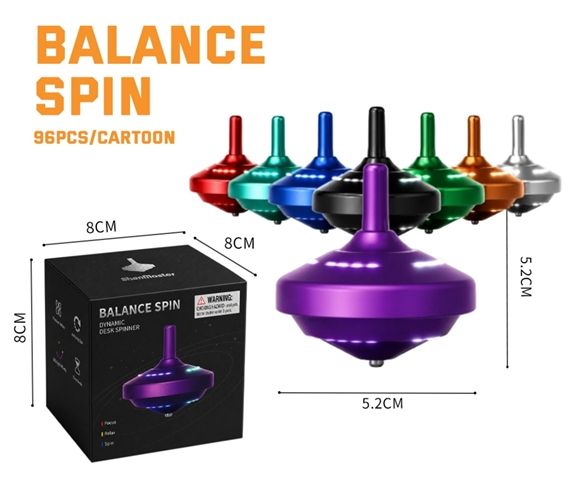
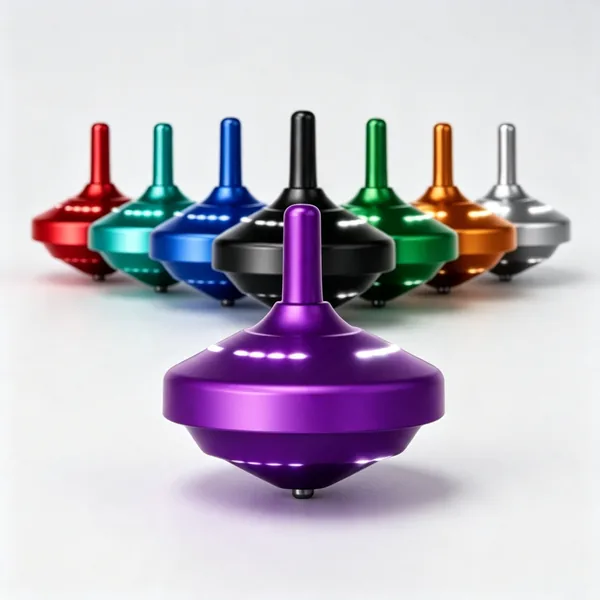
- Assortment economics depend on MOQ per SKU, not average MOQ: in a typical squeeze-toy catalog, MOQs can range from as low as 20 pieces on a simple plastic spinner to 480 pieces on a multi-part puzzle toy, so a six-SKU mix can require a very different cash commitment than a single-SKU order.
- Safety evidence is product-specific: a Children's Product Certificate is issued per product based on test results from a CPSC-accepted laboratory and should never be treated as a blanket factory certificate.
- Packaging and MOQ are linked: private-label packaging, display boxes and retail-ready blister cards usually change the minimum run and the per-unit cost, so confirm both together before comparing quotes.
- A quote is only comparable when it separates tooling, samples, production, decoration, testing, packaging, freight and taxes — otherwise the lowest unit price often hides the highest total cost.
What product details should you evaluate before shortlisting a stress ball supplier?
Start with the tactile specification, because stress balls are bought by hand-feel. A polyurethane foam ball and a TPR-shell gel ball behave differently under repeated squeezing: foam typically retains shape better over many cycles, while gel-filled shells offer a smoother surface but carry rupture risk if the shell is thin. Ask the supplier to describe the filler, the shell material, the target density or firmness, and the recovery behavior after compression.
Then check the assortment logic. A stress ball program usually mixes materials — TPR, silicone, ABS, plastic, metal, vinyl, paper — and each material brings different decoration options, durability expectations and price points. A supplier that can show you a spread of SKUs across material classes is easier to build a coherent assortment with than one that only offers a single foam shape.
Finally, match the product to the buyer's channel. A gift retailer needs giftable packaging and a shape that reads clearly on a shelf. An ecommerce buyer needs a product that photographs well and survives parcel shipping without deformation. A distributor needs a mix that covers multiple price bands. The same factory can serve all three, but only if you specify the channel before sampling.
How should buyers compare stress ball suppliers on product fit and assortment?
Score each candidate supplier on five product-fit questions. First, can they supply the specific shape and size you need, or only a generic round ball? Second, what is the slow-rise recovery time, and can they hold it consistently across a production run? Third, what decoration methods do they support — pad printing, screen printing, heat transfer, laser engraving — and how durable is the print under repeated squeezing? Fourth, what is the odor profile of the material, and can they provide odor or low-VOC documentation? Fifth, what is the per-SKU MOQ, and does it change when you add custom color or custom packaging?
A useful comparison method is to build a simple scoring sheet with weighted criteria: product fit (25%), material documentation (20%), safety evidence (20%), packaging capability (15%), MOQ and pricing transparency (10%), and delivery/QC process (10%). The weights will vary by buyer, but the discipline of scoring forces you to compare evidence rather than impressions.
Illustrative scenario: a distributor evaluating two suppliers for a six-SKU squeeze-toy program might find that one supplier quotes a lower unit price but cannot confirm the MOQ for custom packaging, while the other quotes slightly higher but provides a per-SKU material record, a packaging die-line, and pre-shipment QC photos. The second supplier is the better shortlist candidate because the evidence reduces the risk of a costly packaging or compliance surprise after the PO.
What packaging options do stress ball and fidget toy suppliers offer for retail-ready distribution?
Packaging falls into three tiers, and each tier changes the MOQ and the unit cost. Bulk packaging — polybag, inner box, master carton — is the lowest-cost option and is used for distributors who repack or for ecommerce sellers who ship in their own mailer. Retail-ready packaging — blister card, hanging card, display box, window box — adds tooling and print setup and usually raises the minimum run. Private-label packaging — custom artwork, brand logo, barcode, warning text, country-of-origin marking — sits on top of retail-ready and requires artwork proofing and a packaging approval step.
When you compare suppliers, ask for a packaging die-line or template before you approve artwork, because print placement on a curved or irregular stress ball shape is not the same as on a flat card. Ask whether the supplier can supply a physical packaging sample, not just a digital proof, and confirm who owns the packaging tooling if you switch suppliers later.
For private-label programs, confirm four things in writing: the artwork approval process and revision limits, the minimum order quantity for the custom packaging, the country-of-origin and importer marking requirements for your destination market, and the packaging material specification if you are making an eco-friendly or recycled-content claim. The General Product Safety Regulation (EU) 2023/988 is a separate legal instrument from the Toy Safety Directive, and importer, manufacturer and product-identification information should be mapped to the relevant market role before you finalize packaging copy.
What safety evidence should you request before issuing a stress ball PO?
Safety evidence is product-specific, and the first question is whether the stress ball is a children's product. Under U.S. CPSC rules, children's products intended primarily for children 12 years or younger and subject to a CPSC-enforced safety rule require third-party testing and a written Children's Product Certificate (CPC). The CPC must be based on test results from a CPSC-accepted laboratory, must be in English, and must contain seven required elements: product identification; citation to each applicable CPSC children's product safety rule; identification of the domestic manufacturer or importer; contact information for the individual maintaining test records; date and place of manufacture; date(s) and place(s) of testing; and identification of the third-party, CPSC-accepted laboratory.
If your stress ball is marketed for adults or as a general novelty item, the children's product analysis may point in a different direction, but you still need to confirm the applicable rule set for your destination market. For the EU, toy products placed on the EU market must meet the applicable essential safety requirements of Toy Safety Directive 2009/48/EC, and CE marking and an EU Declaration of Conformity belong to the conformity process and must be matched to the product scope. Never treat a standard, guidance page or audit framework as proof that a specific factory or SKU is certified.
For U.S.-bound shipments, one delivery-compliance change matters: beginning July 8, 2026, importers of most regulated consumer products must electronically file certificates of compliance with U.S. Customs and Border Protection via a Partner Government Agency Message Set. Confirm with your customs broker how this affects your stress ball assortment before the PO, not after.
Ask for the test report, not just the certificate. A test report should identify the product configuration, age grade and standard edition, and it should match the exact SKU, material and decoration you are ordering. If the supplier sends a report for a different product or an expired edition, treat it as missing evidence.
Stress ball supplier evaluation criteria and what to verify
| Product fit — tactile specification | Verify filler type, shell material, firmness, slow-rise recovery and odor; request physical samples of the exact SKU. |
|---|---|
| Product fit — assortment breadth | Verify how many material classes and shapes the supplier can supply; check whether MOQ applies per SKU or per order. |
| Material documentation | Verify a per-SKU material record; a material field in a catalog is not a test report or a compliance document. |
| MOQ transparency | Verify per-SKU MOQ, MOQ for custom color, MOQ for custom packaging, and whether the figure is current and negotiable. |
| Packaging capability | Verify bulk, retail-ready and private-label options; request a die-line and a physical packaging sample before artwork approval. |
| Safety evidence — U.S. | Verify whether the product is a children's product; if so, request a CPC and English-language test reports from a CPSC-accepted laboratory. |
| Safety evidence — EU | Verify the applicable essential safety requirements of Toy Safety Directive 2009/48/EC, CE marking and the EU Declaration of Conformity for the product scope. |
| Customization capability | Verify OEM/ODM scope: custom shape, custom color, custom print, custom packaging, tooling cost and sampling lead time. |
| Pre-shipment QC | Verify the inspection scope, defect criteria, AQL if offered, QC photo or video report, and retained samples identified by model and lot. |
| Quotation and terms | Verify that the quote separates tooling, samples, production, decoration, testing, packaging, freight and taxes; confirm Incoterms and payment terms. |
How should buyers compare MOQ and pricing across stress ball suppliers?
MOQ is the single most misunderstood number in a stress ball quote, because the MOQ printed in a catalog is often the MOQ for the base product, not for the product you actually want. Custom color, custom print, custom packaging and custom shape each carry their own minimum. A supplier might list a low catalog MOQ on a simple plastic spinner but require a much larger run once you add a logo, a display box and a private-label barcode.
When you compare quotes, normalize them to the same Incoterm and the same packaging tier. A FOB quote that excludes packaging tooling is not comparable to a quote that includes it. Ask each supplier to break the quote into eight lines: tooling, samples, production parts, decoration, testing, packaging, freight and taxes. A toy quote should separate these components so the comparison is meaningful.
Price bands in a stress ball assortment vary widely by material and complexity — a small plastic fidget item and a multi-part electronic pop toy sit in very different cost structures. Do not anchor on a single unit price; anchor on the total landed cost per sellable unit after packaging, testing and freight are included.
What delivery and QC checks belong in a pre-PO supplier evaluation?
Delivery terms are where a good supplier and a good quote can still fail. Confirm four things before the PO: the production lead time after artwork and sample approval, the shipping method and estimated transit time to your destination port, the in-hands date you are working backward from, and the payment terms and deposit percentage.
For QC, ask what happens before shipment. A documented process might include in-line checks during molding or assembly, a final random inspection, a QC photo or video report, and retained samples identified by model and lot. Retained samples support later comparison of color, construction, packaging and failure investigations, so ask whether the supplier keeps them and for how long.
If your order is large enough to justify it, commission a third-party pre-shipment inspection. The cost is usually small relative to the risk of receiving a container of deformed or off-color product. For smaller orders, at minimum require a pre-shipment photo report showing the actual packed cartons, the retail packaging, and a sample of the finished product.
How do you verify a Chinese stress ball supplier's identity and factory status?
Supplier verification starts with the legal entity, not the storefront. Ask for the business license and confirm that the company name, address and scope of business match the entity you are paying. If the supplier claims to be a factory, ask for the factory address and check whether it matches the business license address. A trading company can be a perfectly good supplier, but you should know which one you are dealing with because it affects price structure, communication speed and how problems are resolved.
Chenghai, in Shantou, Guangdong, is one of China's dense toy-production clusters, and many squeeze-toy, squishy and fidget suppliers there are small and mid-sized factories or factory-linked trading teams. That density is an advantage for assortment breadth and sampling speed, but it also means the quality range is wide. The cluster's supply-chain advantage is real — mold making, injection molding, printing, packaging and toy logistics sit close together — but it does not replace per-supplier verification.
If a supplier is willing to support an audit, that is a positive signal. Social compliance references such as BSCI or Sedex are used in some programs, but they do not by themselves prove ethical manufacturing or product safety. Treat audit willingness and documentation completeness as scoring criteria, not as a guarantee.
One more verification step: order a paid sample of the exact SKU with the exact decoration and packaging you intend to order. A sample that arrives quickly, matches the spec, and comes with a material record and a packaging die-line tells you more than a catalog and a price list.
FAQ: stress ball supplier evaluation before the PO
What packaging options (polybag, display box, eco-friendly) do fidget toy wholesale suppliers offer for retail-ready distribution?
Suppliers typically offer three tiers: bulk (polybag, inner box, master carton), retail-ready (blister card, hanging card, display box) and private-label (custom artwork, logo, barcode, warning text). Eco-friendly or recycled-content packaging is available from some suppliers but the material specification and any claim must be confirmed in writing, and MOQ usually rises with each tier.
What packaging and labeling options do suppliers offer for private-label custom fidget toys in wholesale quantities?
Private-label programs usually include custom printed cards or boxes, brand logo, barcode, country-of-origin marking and destination-market warning text. Confirm the artwork approval process, revision limits, the MOQ for the custom packaging, and who owns the packaging tooling. Importer and product-identification information should be mapped to the relevant market role before finalizing copy.
How can buyers compare reliable suppliers for custom stress balls?
Compare suppliers on documented evidence rather than catalog impressions: per-SKU material records, MOQ for the exact customization you need, packaging die-lines, safety evidence matched to the product and destination market, pre-shipment QC process, and a quote that separates tooling, samples, production, decoration, testing, packaging, freight and taxes. A weighted scoring sheet keeps the comparison disciplined.
How can buyers compare reliable suppliers for logo stress balls?
For logo stress balls, the differentiators are print durability, print placement on curved or irregular shapes, and color accuracy across the run. Ask for a physical pre-production sample with the logo applied, confirm the decoration method and its durability expectation, and check whether the print is covered in the product's test scope if the item is a children's product.
What is a typical MOQ for custom stress balls, and does it change with packaging?
MOQ varies by product and supplier and must be confirmed for the specific stress ball and the specific customization. In a squeeze-toy catalog, per-SKU MOQs can range from as low as 20 pieces on a simple plastic spinner to 480 pieces on a multi-part puzzle toy. Custom color, custom print, custom shape and custom packaging each usually carry their own minimum, so confirm all of them together.
Do stress balls need a Children's Product Certificate for the U.S. market?
Only if the stress ball is a children's product — intended primarily for children 12 years or younger — and is subject to a CPSC-enforced safety rule. In that case, a CPC based on test results from a CPSC-accepted laboratory is required, along with English-language test reports. A CPC is product-specific and should not be treated as a blanket factory certificate. Confirm the age grading and applicable rules for your exact SKU.
What changes for U.S. imports after July 8, 2026?
Beginning July 8, 2026, importers of most regulated consumer products must electronically file certificates of compliance with U.S. Customs and Border Protection via a Partner Government Agency Message Set. Confirm with your customs broker how this applies to your stress ball assortment before the PO.
Sources
Related Products & Categories
Request a quote or a factory audit
If you are shortlisting suppliers for a stress ball assortment and want to move from checklist to samples, send your target shapes, materials, packaging tier and destination market. A quote that separates tooling, samples, production, decoration, testing, packaging and freight lets you compare suppliers on equal terms — SqueeZaa, a Chenghai-based squeeze-toy supplier, is one example of a factory that structures quotes this way, and you can request a factory audit or sample alongside quotes from other candidates.
Ask for a sample of the exact SKU with the decoration and packaging you intend to order, and compare it against the checklist criteria above before you commit to a purchase order.