
Target 2026 US Edit: Which Squeeze Toy/Fidget Docs?
Use Target’s 2026 holiday edit to organize US squeeze toy and shelf fidget specifications, sample records, packaging drafts, and shipment documents.
Use Target’s 2026 holiday toy edit to shape a US squeeze toy and shelf fidget brief, then approve each purchase against its own specifications, sample record, packaging draft, and destination evidence. Advance the bagged and display-box rotating balls to sample review as packaging alternatives—not as proven squeeze products or Target-selected merchandise. Keep final shipment paperwork separate: the purchase decision needs an agreed product and documented conditions, not a final packing list before an order exists.
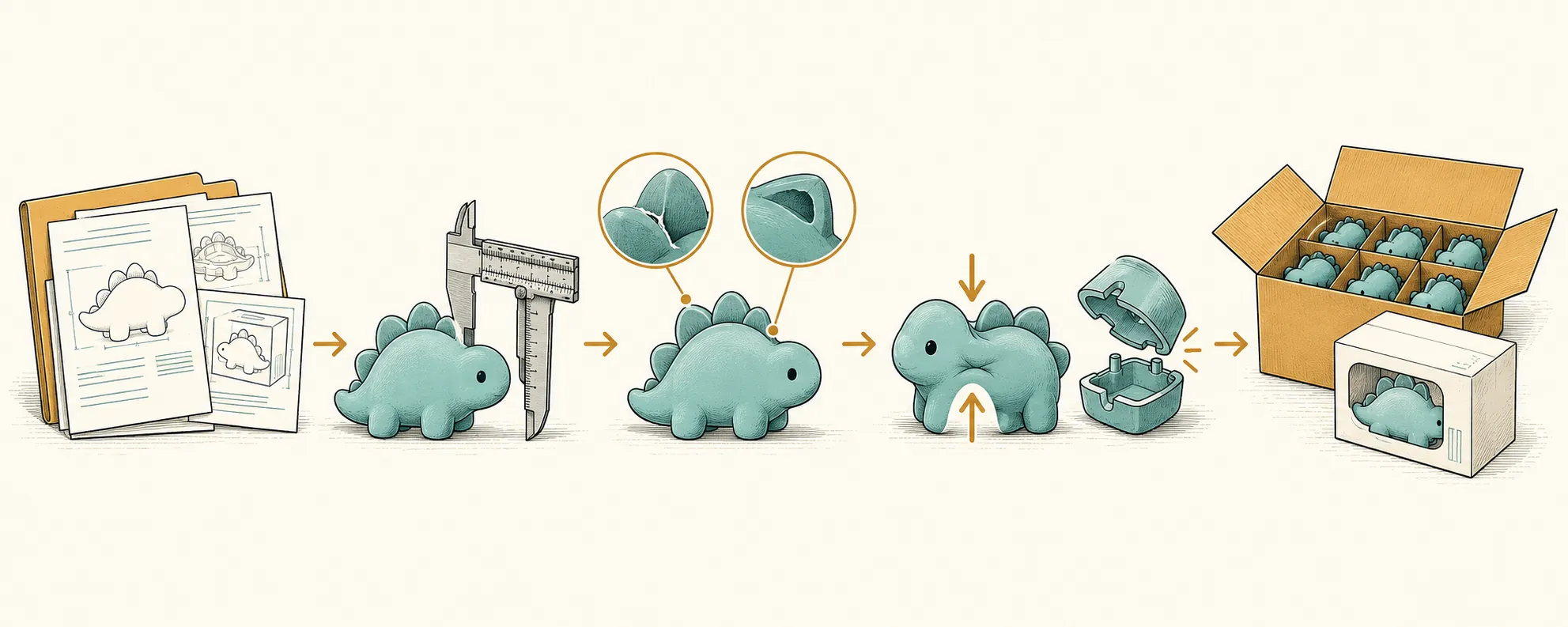
What can a sensory-shelf buyer reasonably take from Target’s list?
Target’s list supports a merchandising direction for tactile play, not a sales forecast for another supplier’s products.
Announced on October 5, 2026, Target’s holiday selection contains 50 toys and includes a “Squish, stretch and surprise” theme combining tactile play, unboxing, and collecting. That is a useful reason to evaluate touch and repeat interaction in a shelf assortment. It does not establish that rotating desk fidgets belong to the selection or that any particular squeeze construction will sell. Target announcement
For this handoff, translate the theme into a buyer brief: assess squeeze feel where the construction supports squeezing, inspect the declared fill where applicable, and compare rotation and quiet repeat play. The announcement supplies neither product authorization nor permission to copy licensed artwork. Keep US retailer merchandising evidence separate from demand assumptions for other destinations.
Which rotating-ball packaging records should move to sample review?
| Confirmed OPP-bag reference — CPS350059 | Recorded product name: Rotating Pressure-Relief Ball. Material: not recorded. Packaging: OPP bag. Reference MOQ: 84 units. Units per carton: 84. MOQ and carton quantity are independent fields, even though their recorded values match. |
|---|---|
| Provisional display-box reference — CPS350179 | Supplied reference fields, pending catalog-source confirmation: Rotating Pressure-Relief Ball; material not recorded; Display Box; reference MOQ 12 units; units per carton 12. These are not confirmed entries in the available verified extract or current commercial terms. Request the underlying record before advancing this candidate. |
| Bagged format: next buyer request | Request a packed sample and proposed label placement. Confirm whether each bag is the intended selling unit and how individual units will be presented on the shelf. |
| Display-box format: conditional next request | After confirming the catalog identity, request photographs and dimensions of the assembled box. Confirm whether it is a consumer selling unit, a multi-unit counter display, or another packing configuration, and state the number of saleable toys it contains. |
| Quantity reconciliation | Confirm MOQ and units per carton separately in the current quote for each candidate that proceeds. Neither a reference MOQ nor a carton quantity establishes an order-multiple restriction or guarantees that the supplier will accept that quantity. |
| Open construction and approval fields | Obtain the component construction, mechanism, material and fill information where applicable, sample observations, proposed age and use evidence, and destination-specific review. Neither the product name nor the packaging reference establishes squeeze feel, quietness, certification, stock, price, or delivery. |
How should squeeze feel, fill, and quiet repeat play be specified?
Specify the interaction only after identifying the sample’s actual construction; a rotating-ball name does not establish a squeezable body, filling, or silent mechanism.
Begin with a component description and sample photographs. Ask the supplier to identify the outer body, moving parts, coatings, and any enclosed fill, distinguishing component materials rather than assigning one material to the whole toy. If there is no fill, do not impose a fill specification.
For a genuinely squeezable sample, agree compression depth, hold time, release method, recovery endpoint, and ambient conditions before comparing feel. Record visible seam changes, coating damage, permanent deformation, and any leakage where relevant. Set the comparison sequence and acceptance criteria before evaluation; do not invent a universal recovery time.
For rotation or other repeated desk interaction, use the same surface and room conditions for both samples. Record resistance, rubbing, clicking, rattling, and any contact noise. If quiet use is essential, make it an acceptance condition rather than an unsupported packaging claim. These are proposed purchasing checks, not safety tests or proof of regulatory compliance.
Which documents belong in the pre-PO handoff?
| Product specification and construction declaration | Owner: supplier technical contact; buyer product lead approves. Useful fields: supplier model and buyer item mapping, revision date, photographs, dimensions, component materials, mechanism, coatings, fill if present, and intended use. Mismatch consequence: the order description may cover a different construction from the sample; resolve the difference before product approval. |
|---|---|
| Current quotation and proposed order terms | Owner: supplier sales contact; buyer purchasing lead accepts. Useful fields: model, specification revision, currency, unit-price basis, MOQ, any explicit order multiple, packaging included, carton quantity, quote validity, and proposed delivery terms. Mismatch consequence: quantities, packaging scope, or cost assumptions may be wrong; revise the quote or purchase proposal before commitment. |
| Sample evaluation and retained-reference record | Owner: buyer quality or product evaluator, with supplier acknowledgment of the approved reference. Useful fields: sample ID, received date, photographs, linked specification revision, agreed interaction method, target criteria, observations, disposition, and reference-sample location. Keep proposed targets separate from measured or observed results. Mismatch consequence: later comparisons may refer to the wrong sample or an unagreed feel; repeat the affected evaluation against the correct identity. |
| Draft packaging artwork and packing specification | Owner: packaging coordinator; buyer packaging approver signs off. Useful fields: artwork revision, selling-unit definition, bag or box dimensions, display configuration, units per inner and master carton, proposed barcode, label locations, and proposed wording. Mismatch consequence: an attractive display draft may still describe the wrong selling unit or case configuration; correct the draft before artwork release. |
| Buyer/importer-defined evidence index and coverage review | Owner: buyer or importer’s designated compliance reviewer; supplier provides supporting documents. The reviewer determines the applicable evidence for the proposed product, destination, age and use against current official requirements, and checks any buyer or retailer conditions separately. Useful fields: destination, proposed age and use, basis for each evidence request, report or certificate references where applicable, tested model and photographs, covered construction and variants, relevant standard editions, issuing parties, and reviewer disposition. This index is not itself a legal obligation checklist or a statement that one standard applies to every item. Mismatch consequence: obtain a documented coverage assessment and resolve unsupported claims or configurations before the affected approval. |
How should the buyer reconcile reports with the ordered construction?
Reconcile evidence by tested construction and documented coverage, not by treating a report title or matching product name as blanket approval.
A report records results for the tested samples and their identified construction. Ask the designated reviewer to compare its sample description, photographs, component materials, mechanism, and covered variants with the specification and proposed packaging. Any use of that evidence for other variants or later production needs a documented coverage basis; a matching SKU alone is insufficient.
Check ongoing-production periodic testing obligations separately from testing or reassessment triggered by material or construction changes, according to the applicable authority’s current requirements. Review buyer or retailer re-verification policies as a separate layer. A later batch or new internal item number neither automatically requires a fresh report nor removes the need to assess coverage and applicable testing duties. Reports do not share a universal expiry rule; record the basis for any renewal, review, or retesting date rather than inventing one.
Keep the destination review specific to the proposed product and use. This handoff is a purchasing record, not a substitute for determining applicable legal requirements, and it does not imply that the products are being submitted to Target.
What should the SKU reconciliation and approval record contain?
| Record identity and revision | Create a handoff reference and revision date; confirm the actual destination rather than deriving it from Target’s US announcement. Link the October 9, 2026 catalog extract, any additional source record, current quote revision, specification revision, sample IDs, packaging revision, and buyer/importer-defined evidence index. |
|---|---|
| OPP-bag reconciliation — CPS350059 | Confirmed catalog reference: Rotating Pressure-Relief Ball; material not recorded; OPP bag; reference MOQ 84; units per carton 84. MOQ and carton quantity are separate fields, not guaranteed current terms. Proposed target: an agreed individually bagged selling unit. Enter the packed-sample observation and current quoted quantities alongside that target before approval. |
| Catalog-source hold — CPS350179 | Provisional handoff reference: Rotating Pressure-Relief Ball; material not recorded; Display Box; reference MOQ 12; units per carton 12. The supplied reference is not corroborated by the available verified catalog extract. Assign purchasing to obtain the underlying catalog entry and a current quote. Close the source hold only when the designated buyer records the supporting source and resolves any discrepancies; otherwise leave the candidate on hold or remove it from consideration. If it proceeds, define the selling unit and reconcile the assembled sample, artwork, and quote without assuming how many toys one display contains. |
| Construction and interaction reconciliation | Target: the approved component description and agreed squeeze or rotation criteria. Observation: enter actual sample findings, measurement conditions where relevant, and supporting photographs; leave untested fields open. Link each departure to a correction, accepted concession within the reviewer’s authority, or rejection. |
| Decision and conditions | Select hold for source confirmation, advance to sample review, approve for PO, approve subject to named conditions, or reject. Distinguish permission to continue evaluation from permission to place the order. For conditional approval, state which actions remain blocked and the evidence needed to close each condition. |
| Responsible approver and decision date | Assign the purchasing decision to a named buyer and date the decision. Identify the separate product, packaging, and destination-evidence reviewers responsible for their approvals. |
| Follow-up closure | Give each condition an action owner and due date. Close it with the supporting source, corrected document revision, coverage assessment, or re-evaluation result, plus the closure date and accepting reviewer. Reopen affected approvals when a disclosed change alters the agreed configuration. |
Which documents should wait until the order and shipment exist?
Final shipment documents should describe the actual consignment, while pre-PO documents define what the buyer intends to purchase.
Before ordering, agree the packing format and proposed quantities. After production and packing, have the supplier’s shipping team prepare the final commercial invoice and packing list with the actual item references, quantities, carton counts, weights, and dimensions. Reconcile them with the approved PO and any accepted amendments. A packing list is not evidence of squeeze feel or report coverage.
Have the logistics owner reconcile the transport document, when issued, with the agreed shipment parties and package details. Keep dispatch inspection results and any shipment-specific documents alongside the release record where applicable. Resolve discrepancies before authorizing the affected shipment; do not turn a document mismatch into an automatic prediction about customs clearance.
Set review and delivery dates from confirmed commercial arrangements. Target’s holiday edit is a planning reference, not a guaranteed demand peak or a timetable for completing this handoff.