Wholesale Squeeze Toys China Factory Direct: Skip the Trading Middleman
Skip Guangzhou trading floors. Source squeeze toys factory-direct from Chenghai/Shantou with verified OEM/ODM, low MOQs, and real factory audits—cut out the middleman risk.
Guangzhou wholesale market stalls do not manufacture squeeze toys. They rent shelf space and add 15–30% to the ex-factory price. The actual production lines are 400 kilometers east, in Chenghai, Shantou—the district that produces over 70% of the world's plastic toys. Sourcing directly from a Chenghai factory lets you pay the manufacturer, audit the production floor, and trace your EN71 or ASTM test report to a specific molding machine. This article maps out how to identify genuine squeeze toy factories in Guangdong, compare them by specialty and MOQ, verify safety certifications, and structure a direct deal that eliminates the middleman markup.
Key Takeaways
- Guangzhou wholesale markets like OneLink Plaza are trading floors, not factories—prices include a middle layer that inflates unit cost by 15–30% and obscures quality control.
- Genuine squeeze toy manufacturing clusters are in Chenghai (Shantou), not Guangzhou; a factory visit or third-party audit confirms whether you're dealing with a real production line or a reseller.
- Factory-direct MOQs for ABS squeeze toys typically start at 864–960 units per design, with OEM/ODM custom development available once you pass a minimum order threshold.
- EN71 (EU) and ASTM F963 (US) certifications are non-negotiable for import clearance—request the actual test report with the factory's legal name, not a generic trading company certificate.
- Comparing factories by specialty (plastic squeeze vs. plush vs. educational) prevents the common mistake of asking a plush house to mold ABS—match the factory to the material.
Comprehensive Manufacturers in Chenghai/Shantou
Chenghai district in Shantou, Guangdong is where the majority of the world's plastic toys originate. The supply chain advantage is vertical: injection mold shops, ABS resin suppliers, pad printing workshops, and packaging factories sit within a 30-kilometer radius. This density compresses lead times and keeps tooling costs lower than anywhere else.
A comprehensive squeeze toy manufacturer handles everything from mold design through assembly and packaging under one roof. Split production—molding in one factory, assembly in another—introduces quality gaps and finger-pointing when something goes wrong. The factory types profiled below represent the main operational models a buyer encounters in the Chenghai cluster.
Evaluating a supplier starts with three questions: Does the company name on the business license match the factory address? Can they show you a live video of your mold running on their floor? Do their test reports list the same entity as the invoice? A 'yes' to all three separates a factory from a trader. Some manufacturers, such as those specializing in ABS-based decompression toys, offer EN71 and ASTM certifications directly traceable to their production address, with MOQs starting in the mid-hundreds—a realistic entry point for importers testing a new category.
Another operational model common in the region is the high-SKU generalist. These factories keep tooling amortized across dozens of designs—squishies, anti-stress balls, pop-its, fidget spinners—allowing them to serve impulse-buy channels like party favors and school-supply aisles without charging each buyer for a new mold. Understanding which model fits your volume and customization needs determines whether you get factory-direct pricing or a repackaged wholesale quote.
Manufacturer Types at a Glance
| Factory Type | Specialty & Typical Profile |
|---|---|
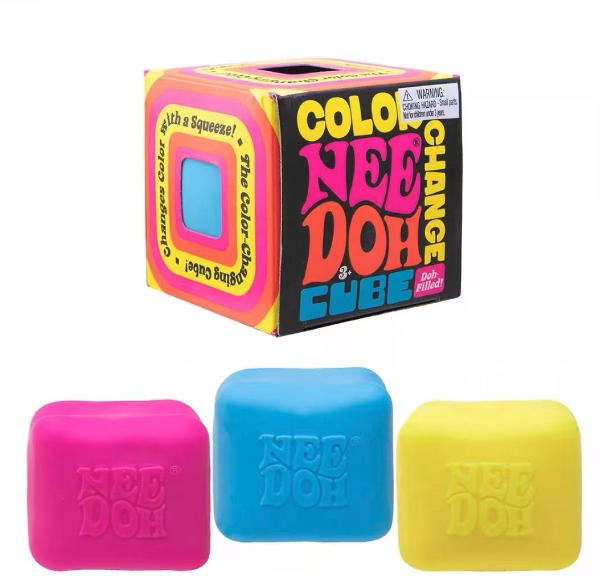
| ABS Specialist | Injection-molded squeeze toys, flour cubes, pretend-play food shapes. Runs 120–250 ton machines. MOQ 864–960 units. Offers EN71/ASTM in factory name. |
| High-SKU Generalist | Plastic squeeze, pop-its, fidget spinners, sensory balls. Amortizes tooling across dozens of SKUs. Suitable for mixed-container orders and impulse-buy channels. |
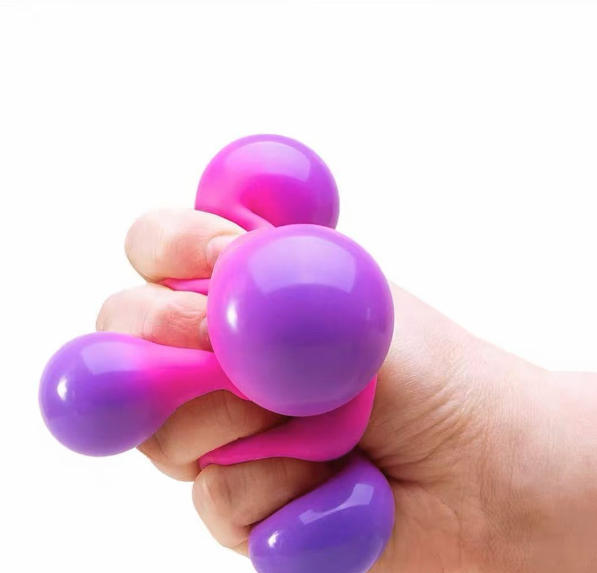
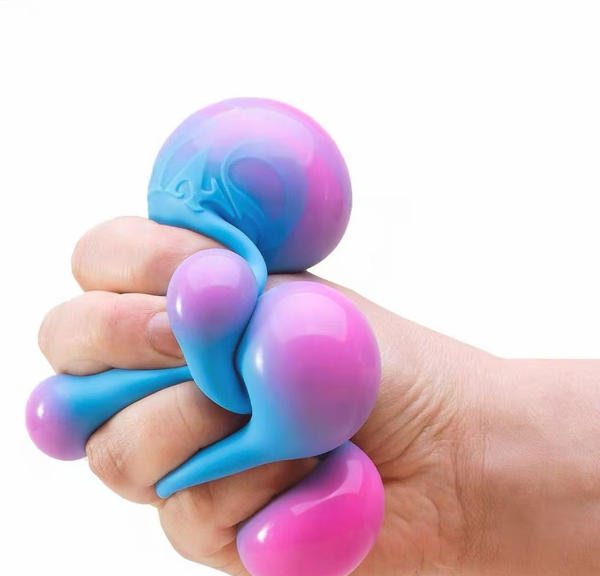
| Soft-Touch & Squishy Specialist | TPR/foam anti-stress balls, slow-rise squishies, party-favor impulse toys. Often serves promotional product and school-supply distributors. |
| Plush/Textile Specialist | Fabric-based squeeze and sensory toys. Different supply chain (textile cutting, sewing, stuffing). Do not ask this factory to mold ABS. |
| OEM/ODM Studio | Full custom development from sketch: mold design, color matching, private-label packaging. Higher MOQ (1,200+) and longer lead time, but full design control. |
By Category: Plastic Squeeze Toys
ABS is the dominant material for durable squeeze toys. It holds fine detail, takes pad printing well, and survives the drop tests that big-box retail auditors run. A factory running ABS squeeze lines will have injection machines in the 120–250 ton range, multi-cavity molds to hit cost targets, and in-house pad printing or UV printing for decoration.
MOQ for ABS squeeze toys typically sits between 864 and 960 units per design. Below that, the factory cannot amortize mold changeover and color-switch downtime. Prices at these MOQs land around $0.55–$0.68 FOB Shantou for a standard flour-cube or cheese-shaped squeeze toy, with packaging (polybag, display box, or blister card) adding $0.08–$0.25 depending on complexity.
Certifications to verify: EN71 Part 1 (mechanical), Part 2 (flammability), Part 3 (migration of certain elements) for EU; ASTM F963 for US; and increasingly REACH and California Prop 65 for retailers that demand chemical-disclosure compliance. A factory that hesitates to share the actual lab report—not just the certificate cover page—is hiding something, usually a subcontractor they don't want you to know about.
Use these benchmarks when comparing quotes: a standard flour-cube squeeze toy at 960 units should land around $0.68 FOB. A 12-piece display-box assortment at 864 units drops the per-unit price closer to $0.55 because the factory runs a larger total volume per batch and the packaging is standardized. If another factory quotes $0.35 for the same spec, the material is almost certainly recycled ABS with inconsistent shrink rates, or the factory is quoting a weight 30% lighter.
By Category: Fidget Toy Combos and Sensory Lines
Squeeze toys sit inside a broader decompression category that includes fidget spinners, pop-its, sensory balls, and fidget cubes. Smart buyers build mixed containers: a base of squeeze SKUs plus fidget toys to hit the container minimum while giving retail buyers a shelf-ready assortment.
Fidget toys emphasize finger action—pressing, flicking, spinning, sliding, flipping—while squeeze toys deliver palm pressure. They sell well together as a 'calm-down kit' or 'desk toy bundle' in school-supply aisles, office gift channels, and convenience-store impulse racks. A factory that molds both categories can consolidate your order onto one production schedule, one QC inspection, and one bill of lading, saving roughly $400–600 in consolidation fees versus splitting the order across two suppliers.
The sensory ball and soft squeeze segments are particularly strong for e-commerce and gift channels. Retailers want the tactile variety: something squishy, something clicky, something stretchy, all in one display. When qualifying a factory for these combo orders, confirm they own molds for multiple sub-categories. A factory that only does pop-its will subcontract the squeeze toys, and your margin disappears into their markup.
What Packaging Options Do Suppliers Offer for Retail-Ready Distribution?
Packaging is where factory-direct sourcing either saves you a second supplier or creates a logistics headache. Most Chenghai squeeze toy factories offer four tiers: bulk polybag (cheapest, no retail presence), header-card polybag (peg-hook ready, basic branding), display box (12–24 pieces in a countertop unit, the standard for impulse retail), and full-color custom box (private-label, requires print-plate investment).
Eco-friendly packaging—kraft paper boxes, soy-based inks, biodegradable polybags—is increasingly available but requires lead-time padding. A factory that runs standard PET blister cards daily may need an extra 10–15 days to source and die-cut recycled cardboard. Specify 'eco packaging' in the RFQ upfront; retrofitting it after mold approval adds cost and delay.
For private-label custom fidget toys, the labeling workflow typically involves the factory printing your UPC, brand logo, and regulatory icons directly onto the packaging during production. The minimum for custom-printed packaging usually aligns with the product MOQ—if the toy MOQ is 960, the custom box MOQ is also 960—because the factory orders die-cut boxes in matched lots. Buyers who need smaller-label runs can use sticker labels applied post-production, though this adds labor cost and risks peeling in transit.
How Can Buyers Compare Reliable Suppliers for Custom Stress Balls and Logo Squeeze Toys?
Comparing factories for custom stress balls or logo squeeze toys requires a different checklist than off-the-shelf sourcing. A mold fee applies—typically $300–$800 for a simple logo-embossed stress ball cavity, amortizable over the order quantity. Factories that quote 'no mold fee' are either building it into the unit price or using a generic shape and adding a pad-print logo, which wears off faster.
Request three things from every shortlisted factory: a photo of a similar custom mold they've built (not a render—an actual steel mold on their shelf), a production sample with the client's logo visible, and the lead time for mold fabrication (typically 15–25 days). Factories that cannot produce all three within 48 hours are likely brokers sourcing the mold from a third-party tool shop, which means you're paying a markup on the mold and losing design control.
Stress ball material matters for logo durability. TPR (thermoplastic rubber) holds fine detail better than PU foam and resists the oil migration that can blur a printed logo inside packaging. Ask the factory to specify the shore hardness—too soft (below 20A) and the logo distorts with every squeeze; too hard (above 40A) and it doesn't feel like a stress ball. The sweet spot for logo stress balls is 25–30A shore.
FAQ
How do I verify a squeeze toy factory is real, not a trading company?
Request a live video call showing your specific mold or a current production run on their floor—not a pre-recorded tour. Cross-check the business license address against the factory location. Ask for a test report (EN71/ASTM) listing the factory's legal name as the applicant, not a trading company's name.
What's a realistic MOQ for custom squeeze toys from Chenghai factories?
For ABS squeeze toys, expect 864–960 units per design as a starting MOQ. Simpler shapes with fewer colors can sometimes go lower; complex multi-part designs may require 1,200+. Mold fees ($300–$800) are separate and can be amortized or refunded against a larger order.
Are Guangzhou wholesale markets cheaper than factory-direct?
No. OneLink Plaza and similar markets add a trading margin—typically 15–30%—on top of the ex-factory price. You also lose traceability: the booth operator rarely discloses which factory actually produced the goods, making quality audits and reorders inconsistent.
What certifications do I need for importing squeeze toys to the US and EU?
US: ASTM F963 (mandatory) plus CPSIA tracking labels for children's products. EU: EN71 Parts 1–3, plus REACH compliance and a Declaration of Conformity. Many retailers now also require California Prop 65 chemical disclosure. Always request the full lab test report, not just the certificate cover.
Can I mix squeeze toys and fidget toys in one container order?
Yes, and it's recommended. A factory that molds both categories can consolidate production, QC, and shipping onto one bill of lading, saving $400–600 in consolidation fees. The mixed assortment also gives your retail buyers a ready-made shelf display across the decompression category.
What packaging options are standard for retail-ready squeeze toys?
Four tiers: bulk polybag (no retail presence), header-card polybag (peg-hook ready), display box (12–24 piece countertop unit), and full-color custom box (private label). Eco-friendly kraft/soy-ink options exist but add 10–15 days to lead time.
Related Products & Categories
Request a Quote
Ready to source squeeze toys directly from the factory floor in Shantou? Send us your design brief or reference sample, and we'll return a full quote with mold timeline, unit pricing at your target MOQ, and packaging options—backed by EN71 and ASTM test reports in the factory's name. Visit www.squeezaa.com to start a conversation, or browse our squeeze and squishy collections at /collections/squishy-toys.